UHMWPE Knee Implant Failure Analysis
An independent failure analysis of Exactech's Optetrak knee implant, examining oxidative degradation of Ultra-High Molecular Weight Polyethylene (UHMWPE) and its link to implant failure.
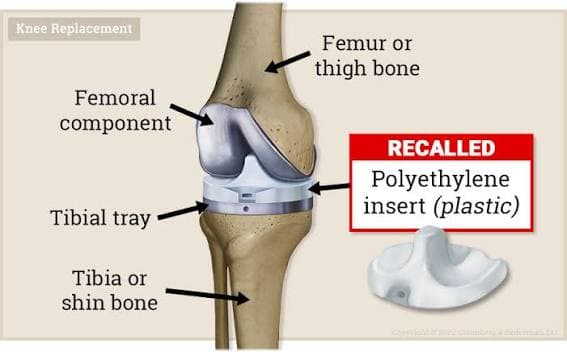
Overview
Between January and March 2025, I conducted an in-depth failure analysis of Exactech's Optetrak knee implant, focusing on the oxidative degradation of Ultra-High Molecular Weight Polyethylene (UHMWPE), the bearing material used in the implant's tibial component.
Problem
UHMWPE components in knee arthroplasty implants can degrade over time through oxidation, which is linked to embrittlement, wear, microcracking, and aseptic loosening, all of which shorten implant lifespan and can lead to revision surgery.
Goal
Characterize how oxidative degradation affects UHMWPE's material properties and connect those changes to real implant failure modes, then propose design and manufacturing improvements to extend implant longevity.
Testing
Applied materials characterization techniques including Scanning Electron Microscopy (SEM) and Differential Scanning Calorimetry (DSC) to evaluate embrittlement, crystallinity, and oxidation indices, and interpreted mechanical testing results such as fatigue and tensile strength to quantify structural degradation under physiologic load conditions.
What I Learned
This project was my first deep look at how a material choice made years before implantation, down to how it is packaged, can determine whether a device survives inside the body for years or fails early. It shaped how I think about biocompatibility as a design constraint, not just a material property.