Fiber Optic Testing for AMF Experimentation
Verifying fiber optic temperature probes on the lab's Alternating Magnetic Field (AMF) applicator, running magnetic hyperthermia heating trials, and writing the full operating procedure for the machine.
Overview
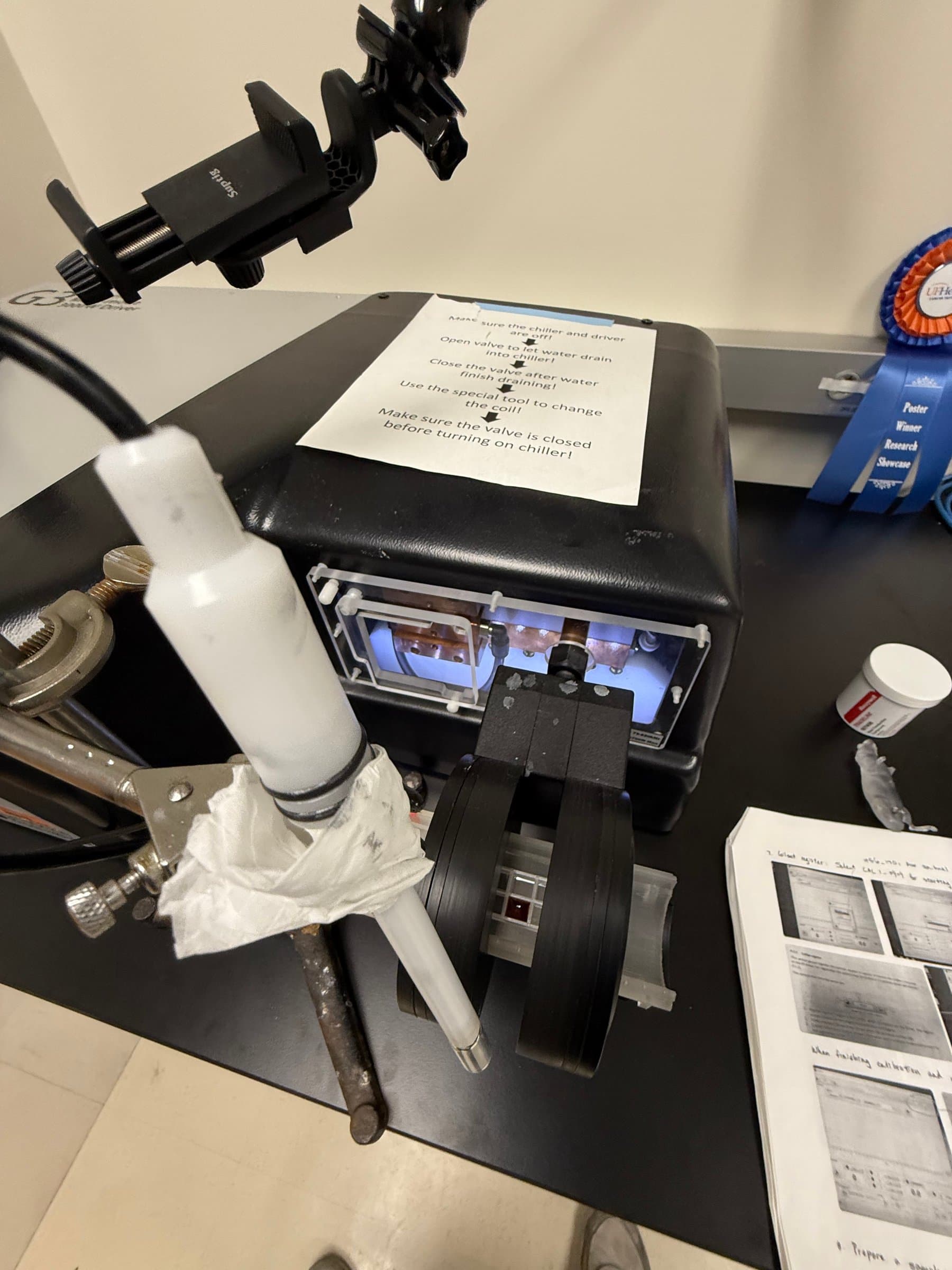
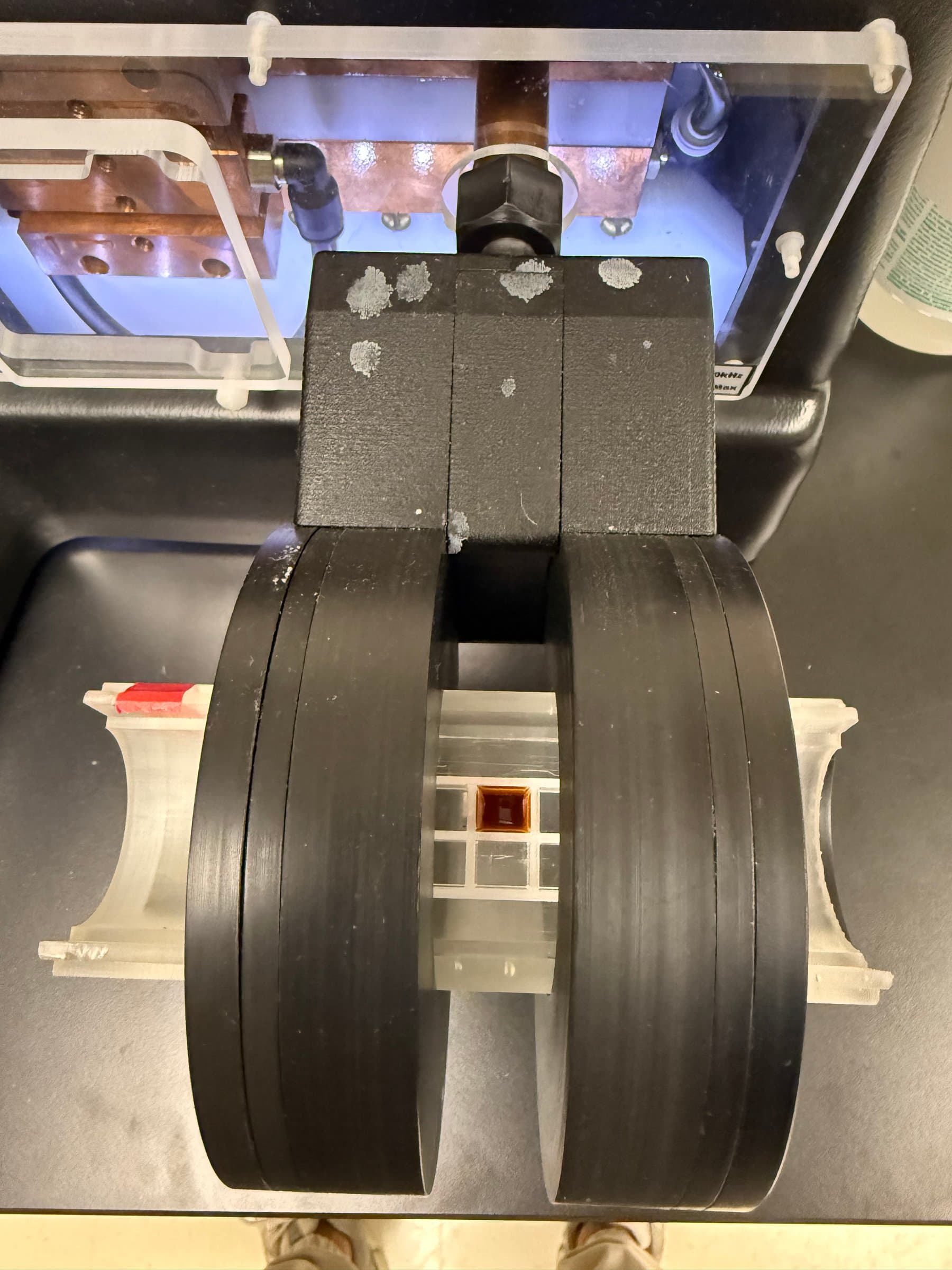
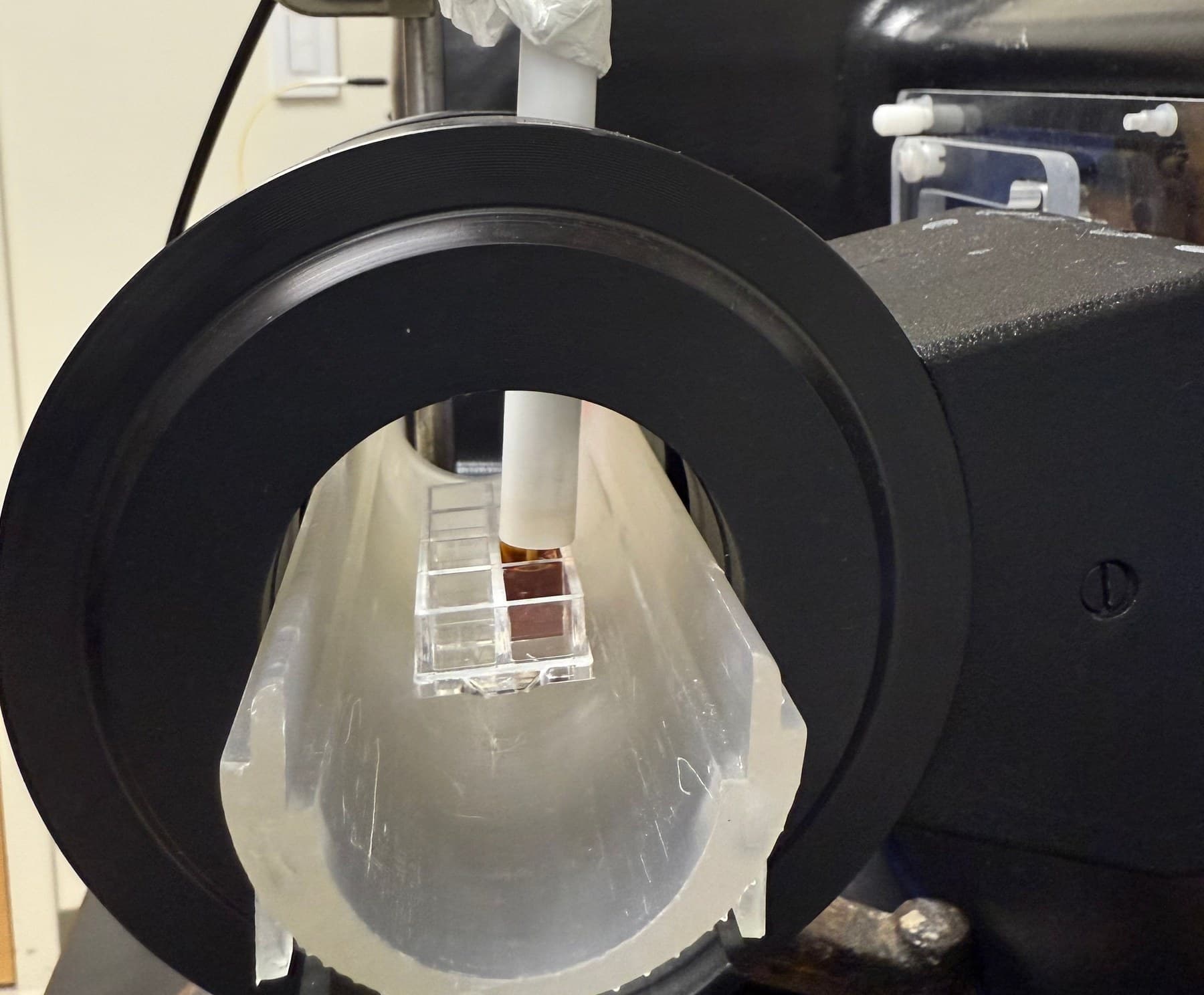
I worked with the Rinaldi-Ramos Laboratory's Alternating Magnetic Field (AMF) applicator, the instrument used to test magnetic hyperthermia: heating magnetic nanoparticle samples by exposing them to an oscillating magnetic field. Since standard metal thermocouples can't be used inside the coil without heating up and interfering with the field themselves, the machine relies on fiber optic probes to read sample temperature. I verified those probes were reading correctly, ran heating trials, and wrote the lab's full operating procedure for the machine.
Problem
The AMF machine had no written procedure, so running it correctly, safely, and reproducibly depended on direct supervision every time. On top of that, its fiber optic temperature probes needed to be confirmed accurate before their readings could be trusted for actual hyperthermia experiments.
Goal
Verify the fiber optic probes were reading temperature correctly during real heating runs, and produce a complete, step-by-step operating guide so other undergraduate researchers could run the AMF machine independently and safely.
Design Process
- Powered up the system in sequence: transformer, cooler, AMF driver, and control laptop
- Connected to the applicator through the MaNIaC control software and registered the correct coilset (animal coilset H56-1701) before calibrating against a reference standard (CAL1-0909)
- Selected an operating frequency close to the target experiment and set up both temperature and field sensors to log correctly
- Aligned each sample vial between the coils using the probe holder's vertical column support, with the fiber optic probe seated halfway through the sample
- Saved each run to a named file with both sensor channels and the save-file checkbox confirmed before starting, then cleared the room and posted a warning sign at the door for the duration of the run
Testing
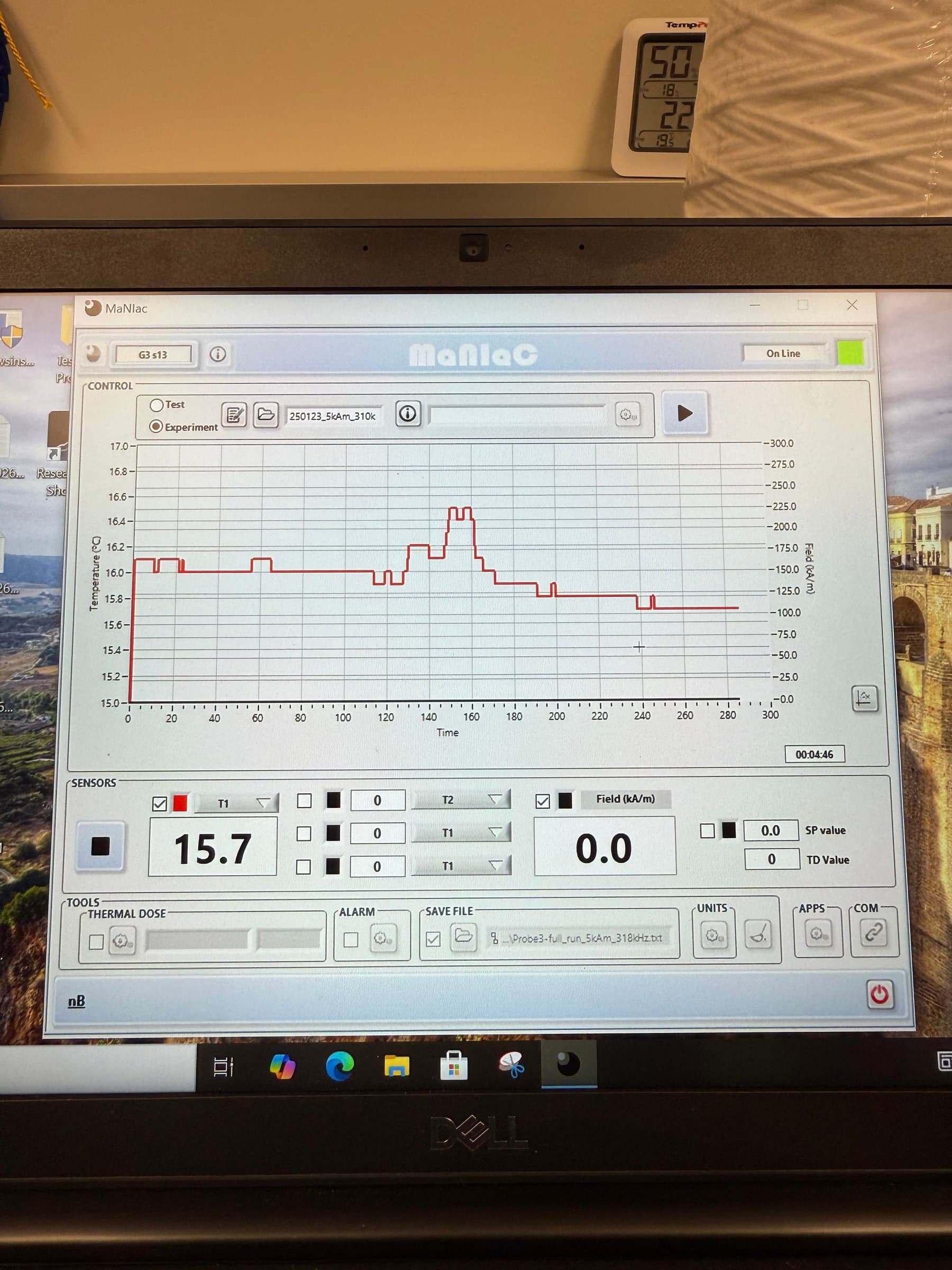
Ran heating trials such as a 5 kA/m, 318 kHz full run, logging fiber optic temperature and field strength together in real time to confirm the probe tracked the field ramp correctly instead of drifting or lagging.
Results
The fiber optic probe tracked the field ramp cleanly, temperature rising from a baseline around 16.0°C to roughly 16.4°C as the field stepped up toward 200 kA/m and back down as it stepped back down, confirming the probes were reliable for hyperthermia measurements. Collected data was exported and run through an Igor Pro template to extract the heating slope used for SAR (Specific Absorption Rate) calculations.
What I Learned
Getting comfortable with the AMF machine meant understanding why it's built the way it is, down to why it uses fiber optics instead of thermocouples in the first place. Writing the operating guide afterward reinforced that research infrastructure depends on documentation being passed down just as much as on the experiments themselves, especially in a lab where undergraduate researchers rotate through.
Tools and Skills
Gallery